For many years, China has been the dominant sourcing base for plastic folding tables, folding chairs, and other blow-molded furniture sold in the United States.
China still has a highly developed manufacturing ecosystem, experienced suppliers, mature tooling capabilities, and efficient supply chains. However, U.S. importers, wholesalers, retailers, event furniture distributors, and sourcing companies are increasingly asking a different question:
Should we continue sourcing all of our folding furniture from China, or should Thailand become part of our supply chain?
For many buyers, this is no longer simply a question of finding the lowest factory price. Tariffs, supply-chain diversification, country of origin, production capacity, quality control, and long-term sourcing stability are becoming equally important.
1. Tariffs Have Changed the Sourcing Calculation
When comparing suppliers, buyers traditionally focused heavily on the FOB price.
Today, that comparison can be incomplete.
For products such as blow-molded plastic folding tables and folding chairs, U.S. importers need to consider the total landed cost, including:
- FOB factory price
- Ocean freight
- U.S. import duties and applicable tariffs
- Inland transportation
- Inventory cost
- Supply-chain risk
- Quality-control cost
- Lead time
A supplier with a slightly lower FOB price does not necessarily provide the lowest landed cost.
This is one of the reasons why American buyers are evaluating manufacturing alternatives outside China.
2. Thailand Is Becoming an Alternative Manufacturing Base
Thailand has developed a strong manufacturing environment for export-oriented industries.
Its advantages include established ports and logistics infrastructure, a substantial industrial base, experience serving international customers, and access to Southeast Asian supply chains.
For folding furniture buyers, Thailand can therefore serve not necessarily as a complete replacement for China, but as an important second sourcing base.
This is particularly relevant for companies that want to reduce dependence on a single country.
3. China + Thailand Can Be a Better Supply-Chain Strategy
The sourcing decision does not always have to be:
China OR Thailand.
For many importers, the better strategy may be:
China + Thailand.
China continues to provide significant advantages in components, tooling, raw materials, manufacturing know-how, and supplier depth.
Thailand can provide an additional manufacturing and export base.
A diversified sourcing structure can help buyers reduce concentration risk while maintaining access to an established Asian manufacturing ecosystem.
4. Folding Furniture Requires More Than Blow-Molding Capacity
A commercial folding table may look simple, but producing it consistently requires control over several manufacturing processes.
These typically include:
- HDPE material formulation
- Blow molding
- Mold control
- Steel tube fabrication
- Welding
- Powder coating
- Assembly
- Packaging
- Load testing
- Quality inspection
- Container loading
Commercial buyers also need consistency across large production runs.
A good folding table supplier therefore needs more than a blow-molding machine. The factory must understand the entire product and quality-control system.
5. What U.S. Buyers Should Evaluate in a Thailand Supplier
Before moving production, buyers should evaluate several areas carefully.
Manufacturing capability
Can the factory manufacture the required table or chair consistently at commercial volumes?
Product engineering
Can the supplier control plastic weight, steel specifications, dimensions, wall thickness, folding mechanisms, and load performance?
Quality assurance
Does the factory have incoming-material inspection, production inspection, finished-product inspection, and load-testing procedures?
OEM capability
Can the supplier support private-label packaging, colors, logos, cartons, product modifications, and new molds?
Compliance
Can the supplier cooperate with third-party inspection and testing organizations when required?
Export experience
Does the supplier understand FOB shipments, container loading, documentation, inspection procedures, and U.S. customer requirements?
These factors are often more important than simply comparing a few cents in unit price.
6. Bestone's Thailand Manufacturing Approach
Bestone Plastic Folding Furniture Co., Ltd. is a Thailand-based manufacturer focused on plastic folding furniture for international buyers.
Our main product categories include:
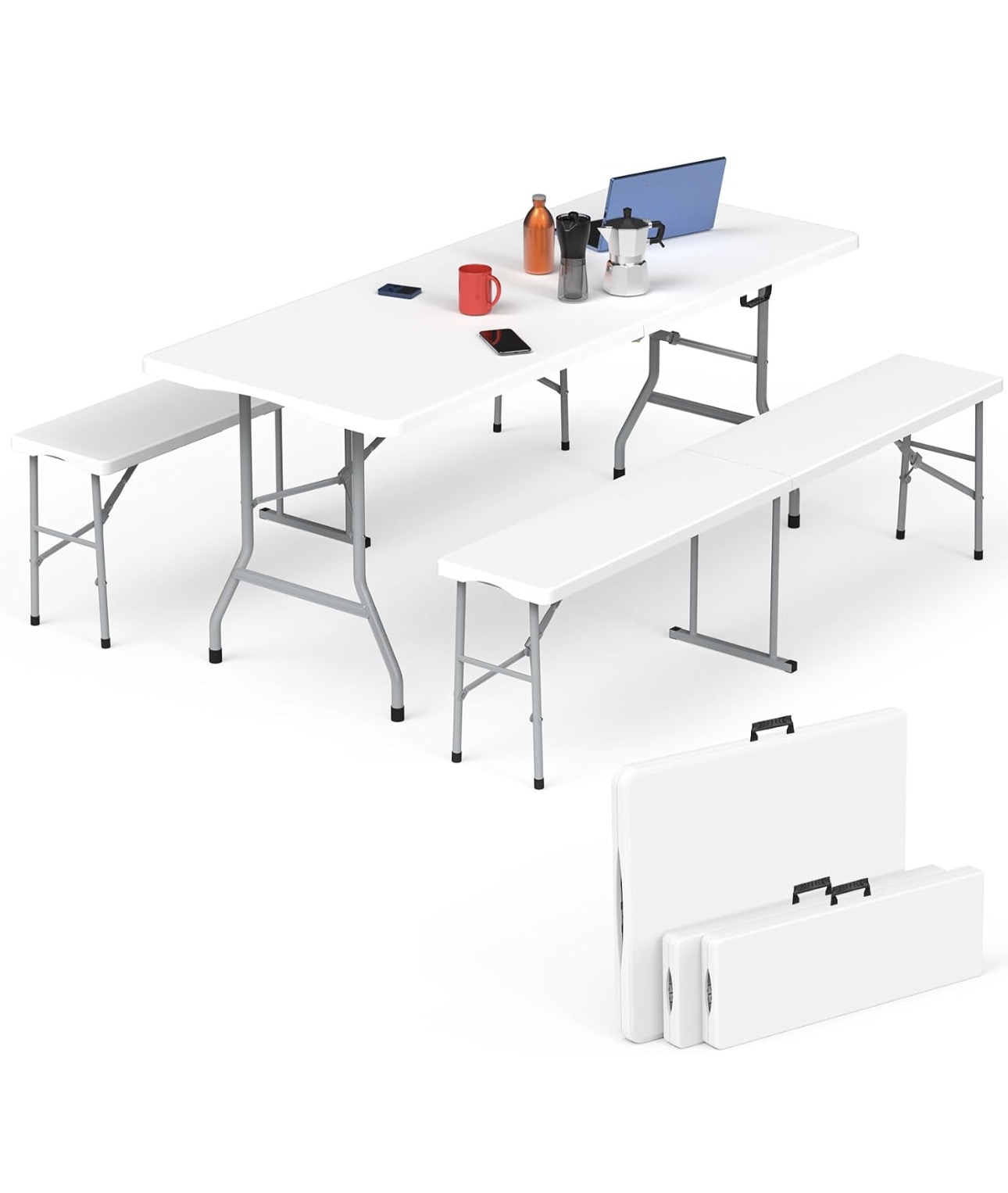
- HDPE blow-molded folding tables
- Fold-in-half tables
- Adjustable folding tables
- Folding chairs
- Folding benches
- Commercial and event furniture
- OEM and private-label folding furniture
Our factory is located in Samut Sakhon, Thailand.
We work with international buyers that require manufacturing flexibility, export packaging, quality control, third-party inspection cooperation, and OEM development.
Our goal is not simply to compete on the lowest possible FOB price.
Instead, we aim to provide buyers with a practical Thailand sourcing alternative for their folding furniture supply chain.
7. A Second Source Can Reduce Long-Term Risk
For a U.S. importer purchasing hundreds or thousands of folding tables and chairs every month, changing suppliers is a major decision.
It does not need to happen overnight.
A practical sourcing strategy can begin with:
- Supplier qualification
- Product specification comparison
- Sample evaluation
- Factory audit
- Load and performance testing
- Trial order
- Small-volume container shipment
- Gradual volume expansion
This allows buyers to establish a second manufacturing source without disrupting their existing supply chain.
8. Total Landed Cost Matters More Than FOB Price
Consider two hypothetical suppliers.
Supplier A offers a lower FOB price but faces higher import costs or greater supply-chain exposure.
Supplier B has a slightly higher FOB price but provides a more favorable overall landed-cost structure and additional sourcing diversification.
The lowest FOB quotation may therefore not produce the lowest final cost.
Professional sourcing teams increasingly evaluate:
Total Landed Cost + Quality + Supply Stability + Risk
rather than:
FOB Price Only
This is an important shift in global procurement.
9. Thailand Is Not About Replacing China
Thailand should not automatically be viewed as a replacement for China.
China remains one of the world's most capable manufacturing economies.
The more important question for U.S. buyers is whether relying on only one sourcing country still provides the best long-term strategy.
For some folding furniture importers, adding Thailand can create a more balanced sourcing portfolio.
10. Looking for a Folding Furniture Manufacturer in Thailand?
If your company currently imports plastic folding tables or folding chairs from Asia and is evaluating a Thailand manufacturing option, Bestone welcomes sourcing discussions.
Buyers can send us:
- Current product specifications
- Product photos
- Target dimensions
- Annual purchasing volume
- Packaging requirements
- Quality standards
- Target load capacity
- Current sourcing challenges
Our team can evaluate whether the product can be manufactured in Thailand and provide a preliminary sourcing proposal.
Bestone Plastic Folding Furniture Co., Ltd.
Thailand Manufacturer of HDPE Folding Tables & Folding Chairs
Product Focus:
Blow-Molded Folding Tables | Folding Chairs | Fold-in-Half Tables | Adjustable Tables | Folding Benches | OEM / Private Label
Website: www.bestonethailand.com
Email: peter@bestonethailand.com
Tel / LINE: +66 99 446 8612
Location: Samut Sakhon, Thailand
Frequently Asked Questions
Can folding tables and chairs be manufactured in Thailand?
Yes. Thailand has an established manufacturing and export infrastructure, and qualified factories can manufacture HDPE blow-molded folding furniture for international markets.
Why are U.S. buyers considering Thailand suppliers?
Common reasons include supply-chain diversification, country-of-origin strategy, landed-cost considerations, manufacturing alternatives, and reducing dependence on a single sourcing country.
Can Thailand factories provide OEM folding furniture?
Depending on the manufacturer, OEM programs can include custom colors, logos, packaging, product specifications, molds, steel-frame configurations, and private-label programs.
Should buyers completely move production from China to Thailand?
Not necessarily. For many companies, a dual-source China + Thailand strategy may provide greater flexibility than relying entirely on one manufacturing country.
What should buyers compare when selecting a folding furniture supplier?
Buyers should evaluate total landed cost, manufacturing capability, product specifications, quality systems, load testing, packaging, capacity, lead time, export experience, and supplier reliability.
China+1 Sourcing: Next Steps for Commercial Buyers
Use the same approved product specification, sample, packing plan and inspection requirements when comparing suppliers. Review total landed cost and capacity for your destination and shipment date; confirm applicable duties and origin requirements for the actual order.
- Thailand second-source and China+1 procurement checklist
- Commercial folding tables for event and party rental
- 6ft vs 8ft folding-table buyer comparison
- How to evaluate a folding furniture manufacturer in Thailand
- Factory audits and manufacturing-scope evidence
- BESTONE quality-test records
Internal static-load tests describe the tested conditions; factory audits apply to their stated scope. Request model-specific evidence and the approved working-load specification for your intended use.
Prepare a complete RFQ with model, quantity, application, destination, shipment date, branding, packaging and testing requirements.